Showing posts with label Tester. Show all posts

Thursday, October 6, 2011

Optical Fiber Testers


Optical fiber requires a unique class of cable testers. Just like copper-cable testers, optical fiber testers are specialized. Figure 1 shows a simple continuity tester that verifies light transmission through the cable.
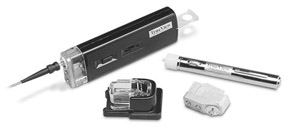
Figure 1: An optical fiber continuity tester
Another type of optical fiber test device is the power meter (also known as an attenuation tester), such as the one shown in Figure 2. Like the continuity tester, the power meter tests whether light is making its way through the cable, but it also tests how much of the light signal is being lost. Anyone installing fiber-optic cable should have a power meter. Most problems with optical fiber cables can be detected with this tool. Good optical fiber power meters can be purchased for less than $1,000.


Figure 2: An optical fiber power meter
Note 
An attenuation tester checks for how much signal is lost on the cable, whereas a continuity tester only measures whether light is passing through the cable.
Many high-end cable testers, such as those available from Hewlett-Packard, Microtest, and others, can test both optical fiber and copper cables (provided you have purchased the correct add-on modules). You need to know a few points when you purchase any type of optical fiber tester:
  • The tester should include the correct fiber connectors (ST, SC, FC, LC, MT-RJ, etc.) for the types of connectors you will be using.
  • The tester should support the type of fiber-optic cable you need to test (single-mode or multimode).
  • A power meter should test the wavelength at which you require the cable to be used (usually 850 or 1,300nm).
Professional fiber-optic cable installers usually carry tools such as an OTDR that perform more advanced tests on optical fiber cable. OTDRs are not for everyone, as they can easily cost in excess of $30,000. However, they are an excellent tool for locating faults.

Monday, September 26, 2011

Twisted-Pair Continuity Tester & Coaxial Tester


Twisted-Pair Continuity Tester

Many of the common problems of getting cables to work are simple ones. The $5,000 cable testers are nice, but for simple installations they are overkill. If the cable installer is not careful during installation, the cable's wire pairs may be reversed, split, or otherwise incorrectly wired. A simple continuity tester can help you solve many of the common problems of data and voice twisted-pair cabling by testing for open circuits and shorts.
Figure 1 shows a simple continuity tester from IDEAL DataComm; this tester (the LinkMaster Tester) consists of the main testing unit and a remote tester. The remote unit is patched into one side of the cable, and the main unit is patched into the other side. It can quickly and accurately detect common cabling problems such as opens, shorts, reversed pairs, or split pairs. Cable testers are available from many vendors and sell for under $100. Testers such as these can save you many hours of frustration as well as the hundreds or even thousands of dollars that you might spend on a more sophisticated tester.

Figure 1: IDEAL's LinkMaster Tester

Coaxial Tester

Although coaxial cable is a little less complicated to install and terminate, problems can still arise during installation. The tester shown in Figure 2 is the IDEAL DataComm Mini Coax Tester. This inexpensive, compact tester is designed to test coax-cable runs terminated with BNC-style connectors. It can test two modes of operation: standard and Hi-Z for long runs. Coaxial-cable testers will quickly help you identify opens and shorts.

Figure 2: IDEAL's Mini Coax Tester